
HomeAbout UsContact Us
Do you have a cough that has lasted for weeks, along with fever, night sweats, or unexplained weight loss? This could be Tubercular Pneumonia, a lung infection caused by the tuberculosis (TB) bacteria. With timely diagnosis and a complete course of treatment, TB pneumonia is curable in the vast majority of cases.
Tubercular pneumonia is a lung infection caused by Mycobacterium tuberculosis, the bacteria responsible for tuberculosis.
Unlike typical bacterial pneumonia, which usually comes on suddenly, TB pneumonia tends to develop more slowly, often over weeks, and can be mistaken for a lingering cold or ordinary chest infection in its early stages. It's a serious but treatable condition, and with a full course of the correct medication, most patients recover completely.
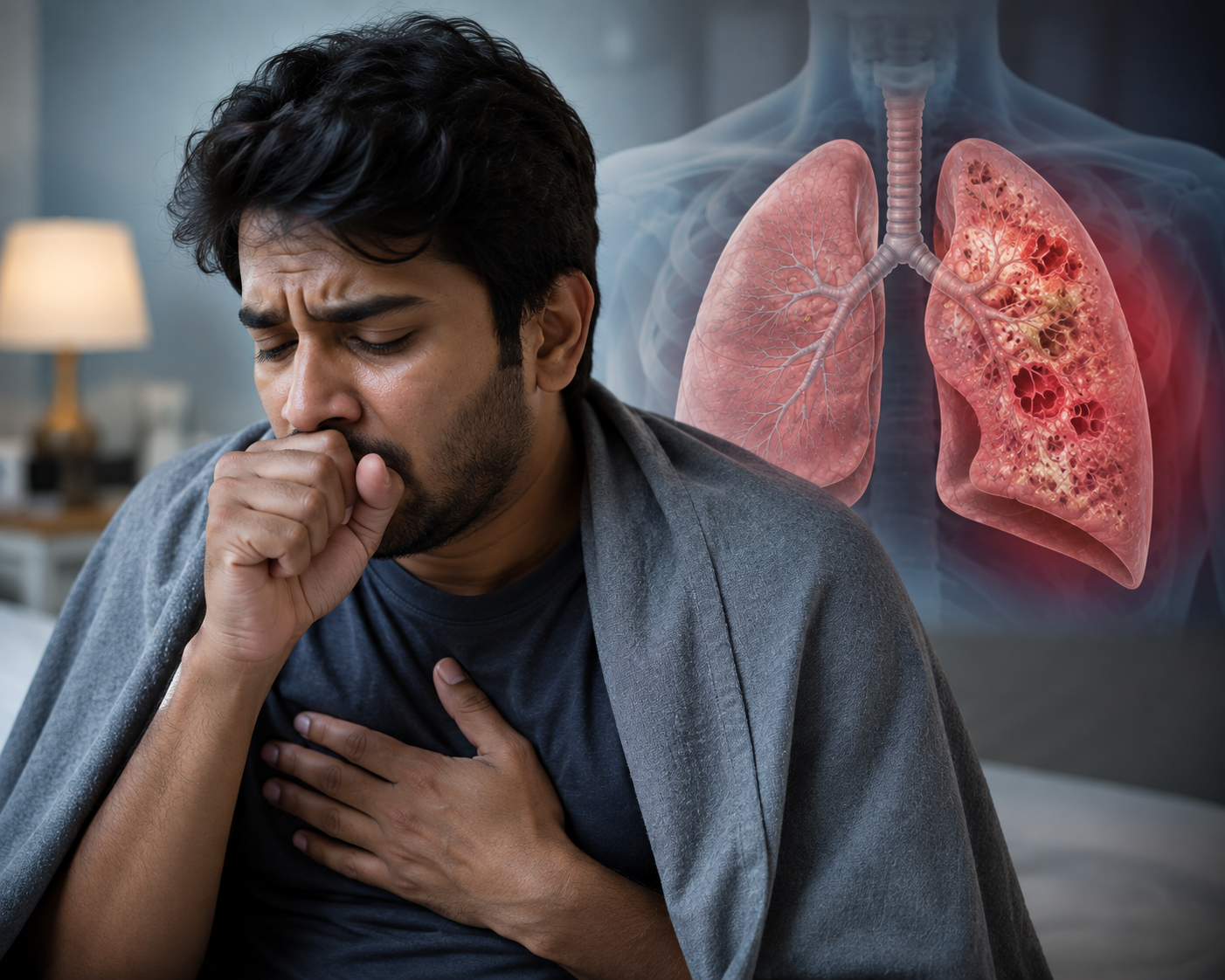
TB pneumonia symptoms usually build up gradually rather than appearing suddenly. Common signs include:
TB spreads from person to person through the air through specific modes of exposure:
Airborne droplets: When a person with active TB in their lungs coughs, sneezes, or talks, they release tiny droplets containing TB bacteria into the air.
Prolonged close contact: TB usually requires extended time spent in close contact with someone who has active, untreated TB, rather than brief passing contact.
Poorly ventilated spaces: Crowded or poorly ventilated indoor spaces increase the risk of transmission.
Weakened immunity: People with weaker immune systems are more likely to develop active TB after exposure, even if others exposed at the same time don't.
Confirming TB pneumonia and ruling out other causes of persistent cough is essential before starting treatment. Dr. Manish Aggarwal uses the following tests:
Provides detailed radiological imaging to evaluate the location and extent of lung involvement.
Rapid diagnostic testing (like GeneXpert) to quickly identify TB DNA and detect initial drug resistance.
Gold-standard test to confirm viable TB bacteria and perform comprehensive drug susceptibility testing.
Includes specific TB screening assays and systemic inflammatory markers when clinically required.
Bronchoalveolar Lavage used in select cases where non-invasive sputum samples are difficult to obtain.
Dr. Manish Aggarwal builds a treatment plan based on the extent of infection and drug resistance found through testing. This typically includes a combination of anti-TB antibiotics taken for six months or longer, with the full course completed even after symptoms improve to avoid relapse or resistance.
Regular monitoring helps manage side effects, while targeted nutritional support aids recovery since TB can affect appetite and weight. Drug-resistant TB cases require a longer, specialized plan, and follow-up sputum tests and imaging confirm the infection has cleared. Since treatment takes months, regular follow-up with Dr. Manish Aggarwal ensures the medication is working and the course is completed successfully.
Every case of TB pneumonia is different, and so is the right treatment for it by Dr. Manish Aggarwal.

Dr. Manish Aggarwal is a pulmonologist with years of experience diagnosing and treating tuberculosis and other complex lung infections.
He completed his MBBS and MD in Tuberculosis and Chest Diseases from Delhi University, followed by NHS clinical experience in the United Kingdom and the prestigious FRCP (Glasgow) from the Royal College of Physicians.
He is known for explaining conditions in simple, easy-to-understand language and building treatment plans around each patient's specific test results, rather than offering a one-size-fits-all approach.
Yes, TB pneumonia is curable in the vast majority of cases with a complete course of anti-TB medication. The key to a full cure is taking the medication exactly as prescribed and for the entire duration, even after symptoms improve, since stopping early is one of the main reasons TB comes back or becomes drug-resistant.
TB spreads through the air when a person with active TB in their lungs coughs, sneezes, or talks, releasing tiny droplets containing the bacteria. It generally requires prolonged close contact with someone who has active, untreated TB, and the risk is higher in crowded or poorly ventilated spaces.
Yes, in many cases the lungs recover well after successful TB treatment, especially when the infection is caught and treated early. However, if the infection was extensive or treatment was delayed, some scarring can remain in the lung tissue, which is why follow-up imaging and lung function assessment are sometimes recommended after treatment is complete.
TB-related chest pain is often described as a dull ache or sharp discomfort that can worsen with deep breathing or coughing. It's usually accompanied by other symptoms like a persistent cough, fever, night sweats, and weight loss, rather than occurring on its own, so it's important to consider the full symptom picture rather than chest pain alone.
Full recovery is confirmed through a combination of completing the entire course of medication, improvement in symptoms, and follow-up tests such as sputum tests or imaging showing the infection has cleared. Your pulmonologist will guide you on the specific tests needed to confirm you're fully cured.
Active TB is generally most contagious before treatment starts. Once appropriate anti-TB medication is started, infectiousness typically drops significantly within a couple of weeks, though your doctor will advise on specific precautions based on your situation and test results.
We are available to answer queries, schedule urgent EBUS sessions or arrange Sleep diagnostic devices.
Get expert diagnosis and a complete treatment plan for tubercular pneumonia from Dr. Manish Aggarwal.