
HomeAbout UsContact Us
Has a scan shown a mass or abnormality in the central part of your chest, or are you dealing with chest pain, breathlessness, or difficulty related to your chest wall or diaphragm? These conditions can look concerning, but many are manageable once properly evaluated. Getting an accurate diagnosis from an experienced Diseases of Mediastinum Specialist is the first step toward the right treatment.
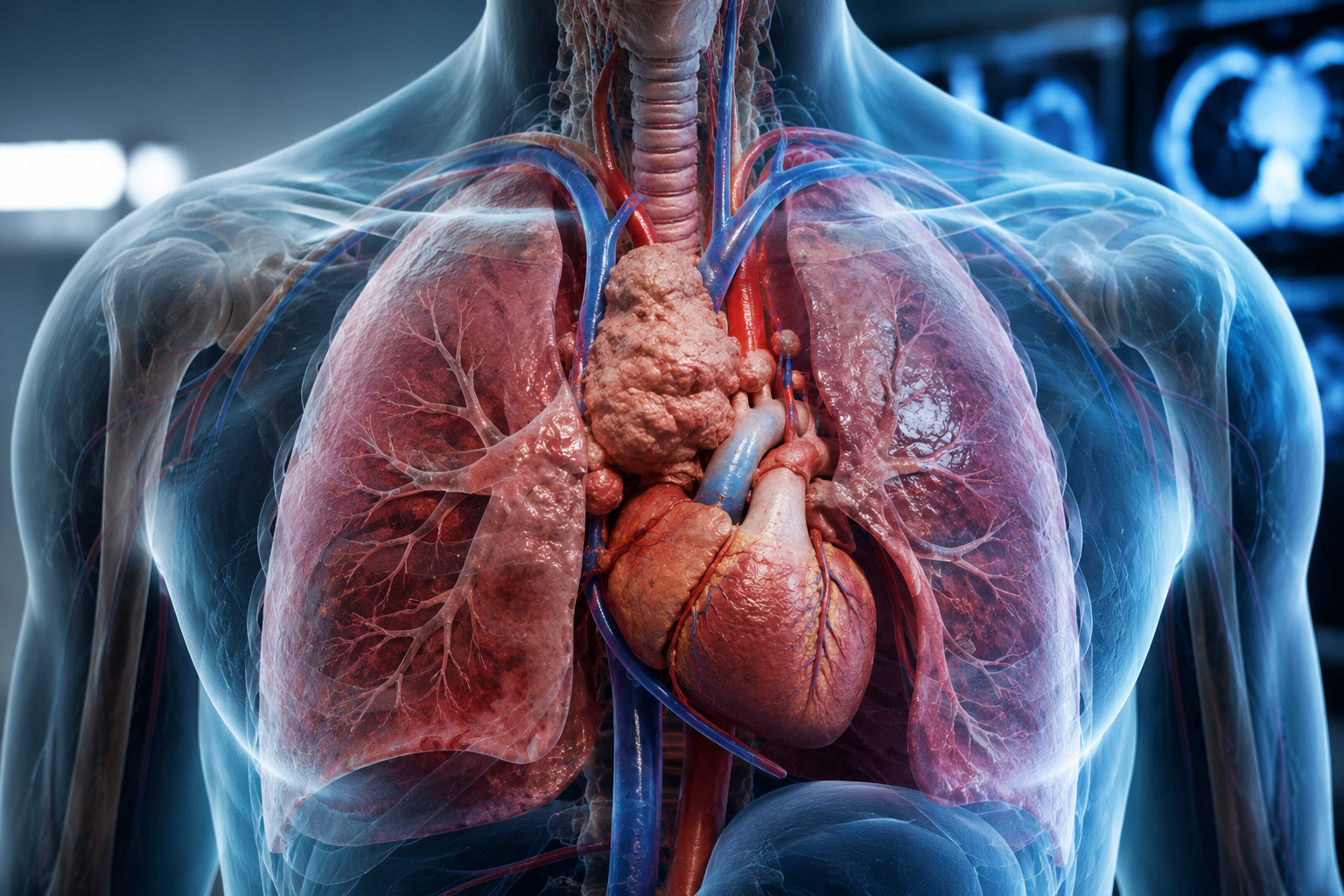
The mediastinum is the central compartment of the chest, located between the two lungs, containing the heart, major blood vessels, the windpipe (trachea), the food pipe (oesophagus), the thymus gland, and lymph nodes.
The diaphragm is the large muscle beneath the lungs that plays the primary role in breathing, separating the chest cavity from the abdomen. Diseases affecting the mediastinum, chest wall, or diaphragm can interfere with breathing, swallowing, or the function of nearby organs, and often need careful evaluation by a Diseases of Mediastinum Specialist to identify the exact cause.
Symptoms vary depending on which structure is affected and how large or advanced the problem is. Common signs include:
A wide range of conditions can affect the mediastinum, often grouped by their location within this central compartment:
Thymomas and thymic tumors: Growths arising directly from the thymus gland.
Lymphomas: Cancers of the lymphatic system that commonly involve mediastinal lymph nodes.
Germ cell tumors: Less common tumors that can pathologically develop in the mediastinum.
Neurogenic tumors: Growths arising from nerve tissue, usually found in the back portion of the mediastinum.
Mediastinitis: Serious acute infection or deep inflammation within the mediastinal space.
Mediastinal cysts: Fluid-filled localized growths that are usually clinically benign.
Alongside mediastinal disease, several chest wall and diaphragm conditions are also frequently managed in advanced pulmonology practice:
Diaphragmatic paralysis or weakness: Directly affecting the muscle's mechanical ability to support normal daily breathing.
Chest wall deformities: Structural conditions such as pectus excavatum or pectus carinatum.
Chest wall tumors: Growths involving the skeletal ribs, supportive muscles, or soft tissues of the chest wall.
Diaphragmatic hernia: Where abdominal organs push upward into the chest cavity through a mechanical weakness in the diaphragm.
Identifying exactly what's causing a mediastinal, chest wall, or diaphragm problem is essential for planning the right treatment. Dr. Manish Aggarwal utilizes the following diagnostic modalities:
Initial and high-resolution imaging to map internal thoracic structures.
Advanced metabolic imaging leveraged when a malignant tumor or cancer is suspected.
Endobronchial Ultrasound with needle aspiration to safely sample central lymph nodes or masses.
Know More
Minimally invasive visual evaluation of the pleural space when directly indicated.
Know More
Functional lung analysis, particularly useful for assessing diaphragm-related breathing limitations.
Know More
Comprehensive blood checks to screen for underlying systemic infections or tumor markers.
The mediastinum houses vital structures like the heart, major blood vessels, and airways, so conditions here can range from harmless cysts to tumours needing prompt treatment. Dr. Manish Aggarwal builds the treatment plan around the exact diagnosis, location, and how it's affecting breathing or other functions, since this area covers a wide range of conditions needing distinct approaches.
Some findings simply need monitoring, while many tumours and structural conditions are best treated with surgery, cancers like lymphoma with chemotherapy and radiation, and infections with antibiotics or drainage. Care is often coordinated across surgery, oncology, and other specialists as needed. Since this region affects breathing, swallowing, and nearby vital structures, early diagnosis with your Diseases of Mediastinum Specialist makes a meaningful difference in outcomes.
Every case involving the mediastinum, chest wall, or diaphragm is different, and so is the right approach for it by Dr. Manish Aggarwal, your trusted Diseases of Mediastinum Specialist in Delhi.

Dr. Manish Aggarwal is a pulmonologist with years of experience diagnosing and managing diseases of the mediastinum, chest wall, and diaphragm.
He completed his MBBS and MD in Tuberculosis and Chest Diseases from Delhi University, followed by comprehensive NHS clinical training in the United Kingdom and the prestigious FRCP (Glasgow) from the Royal College of Physicians.
He is known for explaining complex thoracic conditions in simple, easy-to-understand language and building treatment plans around each patient's specific test results, rather than offering a one-size-fits-all approach.
Besides tumors like thymomas, lymphomas, and germ cell tumors, other mediastinal conditions include mediastinitis (infection or inflammation), mediastinal cysts, enlarged lymph nodes from infections like tuberculosis, and vascular abnormalities involving the major blood vessels that pass through this region.
The '4 T's' is a commonly used way to remember the main causes of a mass in the front (anterior) part of the mediastinum: Thymoma, Teratoma (and other germ cell tumors), Thyroid masses (such as a goitre extending into the chest), and Terrible lymphoma (a memorable way to refer to lymphoma). This helps guide the initial list of possibilities when a mass is found in this location.
The mediastinum is the central compartment of the chest between the two lungs, containing the heart, major blood vessels, windpipe, food pipe, thymus, and lymph nodes. The diaphragm is the large muscle beneath the lungs that separates the chest from the abdomen and plays the main role in the mechanics of breathing.
Pleural disease refers to conditions affecting the pleura, the thin lining around the lungs, such as pleural effusion or pleural tumors. Mediastinal disease refers to conditions affecting the central chest compartment between the lungs, such as mediastinal masses or mediastinitis. While they're in neighbouring areas of the chest, they involve different structures and are evaluated somewhat differently, though both fall within a pulmonologist's expertise.
There's no single best treatment, since it depends entirely on what the mass is. Benign findings like simple cysts may only need monitoring, while tumors like thymoma or chest wall involvement often need surgery, and cancers like lymphoma are typically treated with chemotherapy or radiation. Dr. Manish Aggarwal decides the right approach based on biopsy results and imaging findings.
The Felson classification divides the mediastinum into three compartments on a chest X-ray: anterior, middle, and posterior, based on their location relative to the heart, trachea, and spine. This classification helps doctors narrow down the likely causes of a mediastinal mass based on which compartment it's found in, since different conditions tend to occur in different areas.
We are available to answer queries, schedule urgent EBUS sessions or arrange Sleep diagnostic devices.
Get expert evaluation and a personalised treatment plan for mediastinal, chest wall, or diaphragm conditions from Dr. Manish Aggarwal, your trusted Diseases of Mediastinum Specialist in Delhi.