HomeAbout UsContact Us
Are you struggling to catch your breath, especially when lying down, or coughing up frothy or pink-tinged mucus? This could be pulmonary edema, commonly described as fluid inside the lungs. It can develop suddenly or build up gradually, and either way, it needs prompt evaluation and treatment.
Pulmonary edema happens when fluid builds up inside the air sacs of the lungs, making it harder for oxygen to pass into the blood. In everyday terms, it's often described as fluid inside the lungs, and it's different from a pleural effusion, where fluid collects around the lungs rather than inside them.
Pulmonary edema is usually a sign of another underlying condition, most often related to the heart, though it can also occur due to other causes. Depending on how quickly it develops, it can range from a mild, manageable issue to a medical emergency that needs urgent treatment.
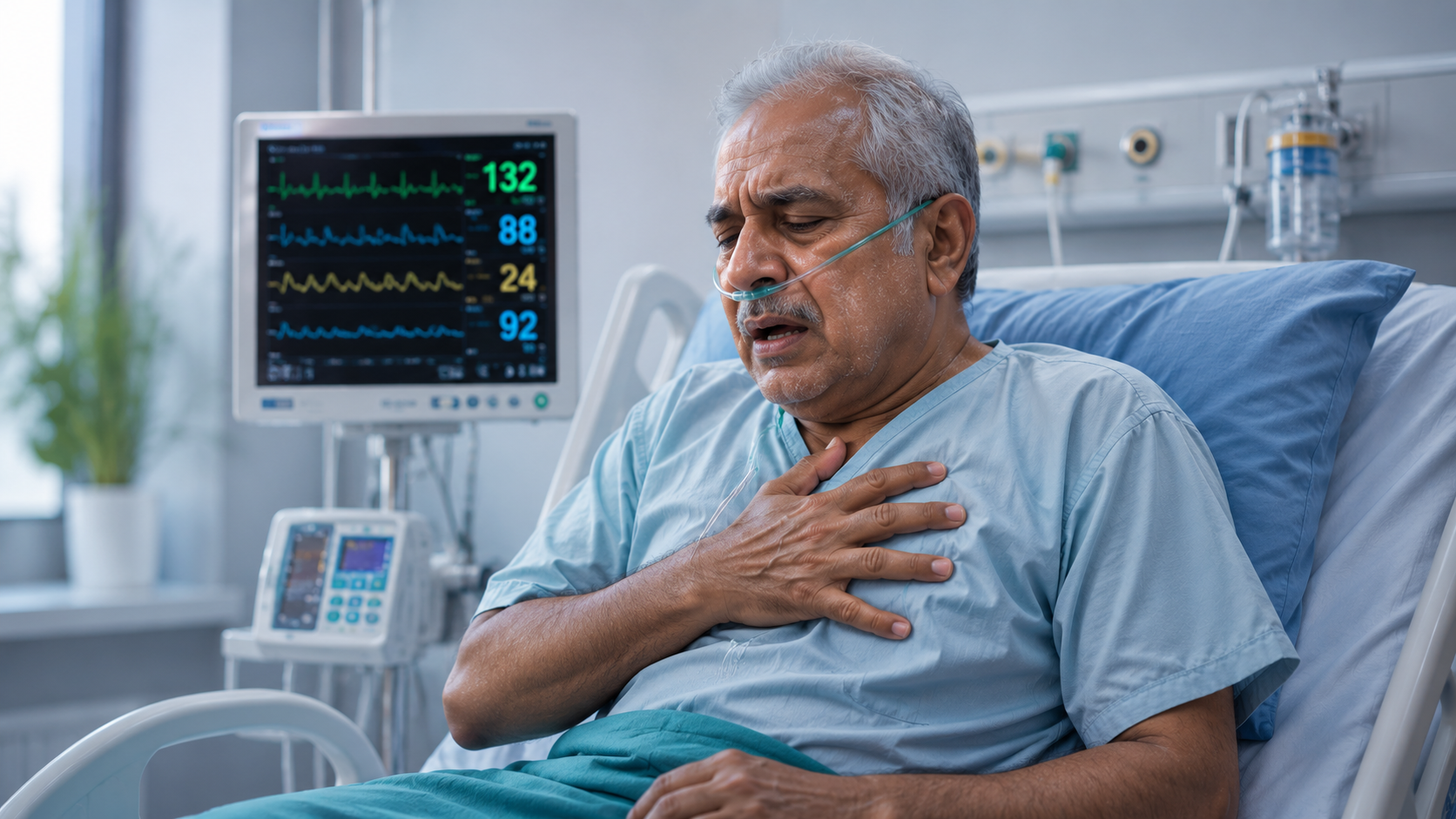
Symptoms can appear suddenly or build up gradually, depending on the underlying cause. Common signs include:
Pulmonary edema develops when fluid leaks into the air sacs of the lungs, most often due to an underlying condition:
Heart failure: The most common cause, where the heart isn't pumping efficiently, causing fluid to back up into the lungs.
Kidney (renal) failure: Reduced ability to remove excess fluid from the body can lead to fluid build-up in the lungs.
High-altitude exposure: Rapid ascent to high altitudes can cause a specific type of pulmonary edema in some individuals.
Lung injury or infection: Severe infections or direct injury to the lungs can cause fluid to leak into the air sacs.
Medications or toxin exposure: Can occasionally contribute directly to fluid build-up in the pulmonary system.
Identifying pulmonary edema, and more importantly, its underlying cause, is essential for deciding the right treatment. Dr. Manish Aggarwal uses the following targeted tests:
Usually the primary step taken to confirm fluid presence in the lungs.
Provides a more complex, detailed look when structural evaluation is needed.
Continuous pulse oximetry monitoring to gauge respiratory efficacy.
Detailed metabolic assessment of baseline gas exchange profiles.
Run dynamically to check heart, metabolic, and kidney function panels.
Pulmonary edema can escalate quickly, so treatment often focuses on immediate relief alongside addressing what's causing the fluid to accumulate. Dr. Manish Aggarwal builds the treatment plan based on how severe the fluid build-up is and what's causing it, since heart-related and kidney-related cases often call for different approaches.
Oxygen support is often the priority in severe cases, while diuretics help clear excess fluid, particularly when the heart or kidneys are involved. Alongside this, treating the underlying cause, whether heart failure, kidney failure, or infection, is essential to keep the fluid from returning, with medications to support heart function or dialysis used where relevant. Severe or rapidly worsening cases require hospitalisation for closer monitoring and more intensive care.
Sudden breathlessness with fluid in the lungs can be an emergency. Get expert care from Dr. Manish Aggarwal.

Dr. Manish Aggarwal is a pulmonologist with years of experience diagnosing and treating pulmonary edema and other lung and breathing-related conditions.
He completed his MBBS and MD in Tuberculosis and Chest Diseases from Delhi University, followed by NHS clinical experience in the United Kingdom and the prestigious FRCP (Glasgow) from the Royal College of Physicians.
He is known for explaining conditions in simple, easy-to-understand language and building treatment plans around each patient's specific underlying cause, rather than offering a one-size-fits-all approach.
Pulmonary edema itself can usually be resolved with prompt treatment, especially when the underlying cause, such as heart failure or infection, is identified and managed. However, if it's linked to a long-term condition like chronic heart or kidney disease, ongoing management is needed to prevent it from happening again.
Reducing fluid in the lungs typically involves oxygen support to ease breathing, diuretic medicines to help the body remove excess fluid, and treating the underlying cause, whether that's the heart, kidneys, or an infection. This should always be done under medical supervision rather than attempted at home, since pulmonary edema can worsen quickly.
Common signs include sudden or worsening breathlessness, especially when lying down, a cough with frothy or pink-tinged mucus, wheezing, and a rapid heartbeat. If you notice these symptoms, especially if they come on suddenly, it's important to seek medical attention promptly, since pulmonary edema can be a medical emergency.
When pulmonary edema is caused by renal failure, treatment focuses on removing the excess fluid the kidneys can't clear on their own, often through diuretics if the kidneys still respond to them, or through dialysis if they don't. Oxygen support is also given as needed, alongside close monitoring of fluid balance and kidney function.
It can be, particularly when it develops suddenly and causes severe breathlessness. This is often called acute pulmonary edema and needs immediate medical attention. Gradual, milder forms linked to chronic conditions still need timely treatment but may not always require emergency care.
Yes, if you're experiencing sudden or severe breathlessness, especially with frothy or pink-tinged mucus, a feeling of suffocation, or bluish lips, seek emergency care right away rather than waiting, since pulmonary edema can worsen quickly without treatment.
We are available to answer queries, schedule urgent EBUS sessions or arrange Sleep diagnostic devices.
Fluid building up in the lungs can worsen quickly, so prompt evaluation matters. Get expert diagnosis and timely treatment for pulmonary edema from Dr. Manish Aggarwal.