
HomeAbout UsContact Us
Was pleural thickening mentioned on your chest scan report? This refers to the pleura, the thin lining around your lungs, becoming thicker than normal, often due to past infection, inflammation, or exposure to certain substances. While it can sound concerning, an evaluation by an experienced Pleural Thickening Specialist can help you understand exactly what it means for you and whether any treatment is needed.
Pleural thickening happens when the pleura, the thin membrane surrounding the lungs and lining the chest wall, becomes thicker than usual, often as a result of scarring from a past infection, inflammation, or exposure to irritants like asbestos.
In many cases, pleural thickening is a finding that doesn't cause any symptoms and doesn't need active treatment. In other cases, especially when it's more extensive, it can restrict how well the lungs expand and lead to breathlessness. A proper evaluation by a Pleural Thickening Specialist helps determine which category your case falls into.
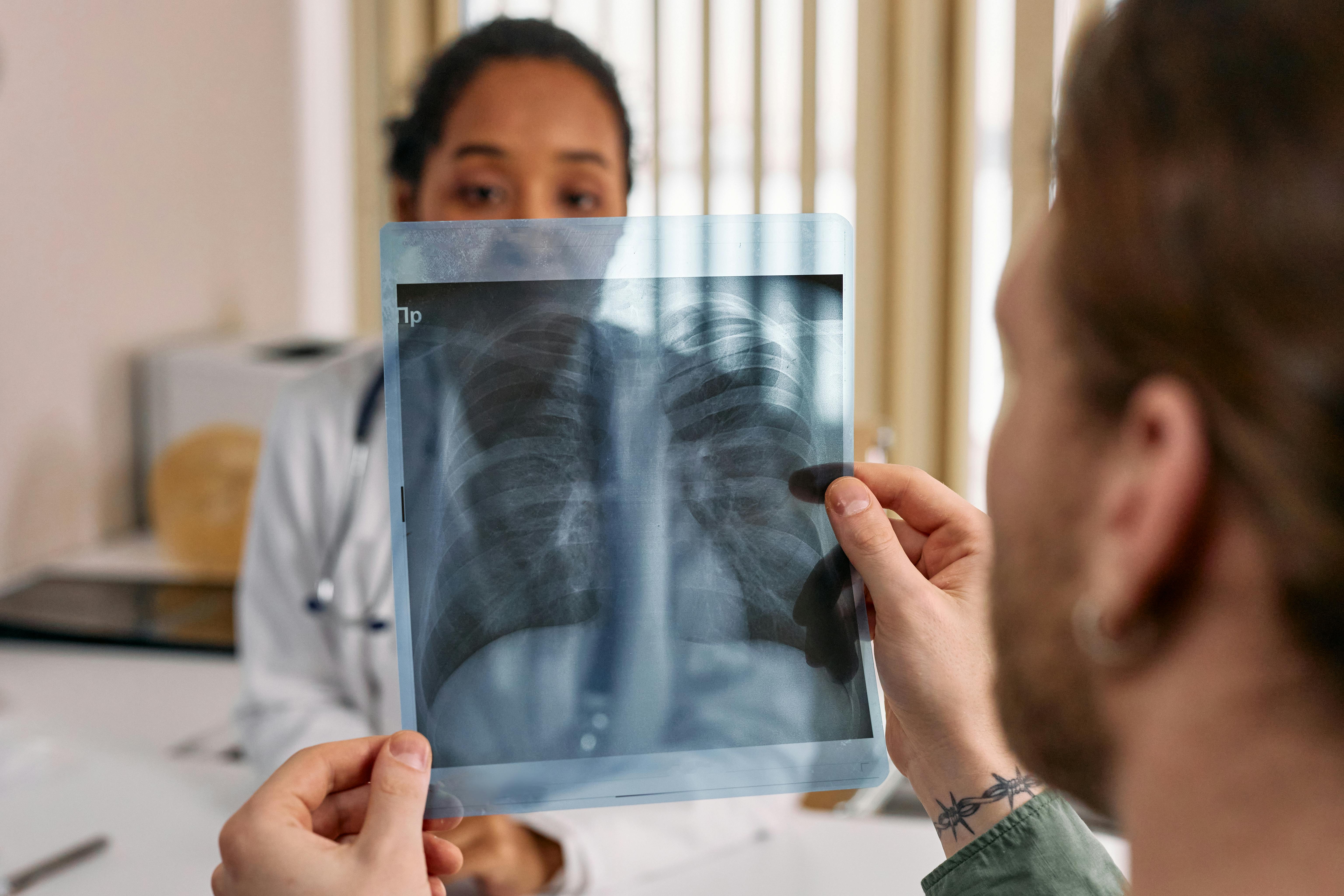
Mild pleural thickening often causes no symptoms at all and is found incidentally on a scan. When more extensive thickening is present, symptoms may include:
Pleural thickening develops as a result of scarring or inflammation in the pleura. Common causes include:
Past Infections : Such as tuberculosis or pneumonia that involved the pleura.
Asbestos Exposure : Long-term exposure to asbestos is a well-known cause, particularly in people with a history of occupational exposure.
Pleural Effusion : A resolved fluid build-up around the lung can sometimes leave behind areas of thickening.
Autoimmune Conditions : Such as rheumatoid arthritis, which can cause inflammation of the pleura over time.
Previous Chest Surgery or Injury : Can lead to localised scarring and thickening.
Confirming pleural thickening and understanding its likely cause and extent helps decide whether monitoring or further evaluation is needed. Dr. Manish Aggarwal uses the following tests:
Pleural thickening is usually found incidentally on imaging, often the lasting trace of a past infection rather than an active problem. Dr. Manish Aggarwal decides the right approach based on the extent of thickening, its likely cause, and whether it's affecting your breathing, since most cases call for observation rather than intervention.
Mild, stable thickening is typically just monitored, while thickening linked to an ongoing cause, such as tuberculosis or an autoimmune condition, is managed by treating that condition directly. Surgery is reserved for rare cases where extensive thickening meaningfully restricts lung expansion. Since pleural thickening is often stable rather than active disease, regular follow-up with your Pleural Thickening Specialist helps confirm it stays that way.
Understand exactly what your pleural thickening means and whether it needs treatment. Get evaluated by Dr. Manish Aggarwal, your trusted Pleural Thickening Specialist in Delhi.
Dr. Manish Aggarwal is a pulmonologist with years of experience diagnosing and managing pleural thickening and other chest conditions. He completed his MBBS and MD in Tuberculosis and Chest Diseases from Delhi University, followed by NHS clinical experience in the United Kingdom and the prestigious FRCP (Glasgow) from the Royal College of Physicians.
He is known for explaining conditions in simple, easy-to-understand language and helping patients understand incidental scan findings without unnecessary worry, while building a treatment plan around each patient's specific test results.
It depends on the extent and underlying cause. Mild pleural thickening found incidentally on a scan is often not serious and doesn't need active treatment, but more extensive thickening that restricts lung expansion, or thickening linked to a serious underlying cause, needs proper evaluation and follow-up.
Treatment depends on the cause and extent of the thickening. Mild, stable cases are often just monitored with periodic imaging, while treatment for cases linked to an active infection or autoimmune condition focuses on managing that underlying cause. In rare cases with significant lung restriction, pulmonary rehabilitation or surgery may be considered.
For most people, pleural thickening alone doesn't affect life expectancy, especially when it's mild and stable. The outlook depends much more on the underlying cause, such as whether it's linked to a past infection, asbestos exposure, or another condition. A Pleural Thickening Specialist can give a clearer picture based on your specific scan findings and history.
Yes, tuberculosis is one of the common causes of pleural thickening, particularly when it has involved the pleura or caused a pleural effusion in the past. If you have a history of TB and pleural thickening is found on a scan, it's often related, though your specialist will confirm this based on your specific case.
Pleural thickening caused by scarring is usually permanent, since it represents old scar tissue rather than active inflammation. However, if it's linked to an active cause, such as an ongoing infection, treating that condition can prevent further thickening, even though existing scarring typically remains.
Not necessarily. Pleural thickening is a common incidental finding, and in most cases, it doesn't indicate anything serious. That said, it's worth getting it evaluated by a pulmonologist to understand the likely cause and confirm it doesn't need any further action.
We are available to answer queries, schedule urgent EBUS sessions or arrange Sleep diagnostic devices.
Most cases of pleural thickening are mild and don't need treatment, but only an evaluation can confirm that for you. Consult Dr. Manish Aggarwal, your trusted Pleural Thickening Specialist in Delhi.