
Hypersomnia: Excessive Daytime Sleepiness, Explained
You slept a full night, but by mid-morning you're fighting to stay awake—in meetings, in traffic, even mid-conversation. This is hypersomnia, and it's often a sign the body isn't getting truly restful sleep at night, most commonly because of an underlying breathing problem. Dr. Manish Aggarwal, a Pulmonologist and Sleep Medicine Specialist, explains hypersomnia from a lung and sleep-breathing perspective—how it develops, how it's diagnosed, and how it's treated.
What Is Hypersomnia?
Hypersomnia means feeling excessively sleepy during the day despite getting what should be enough hours of sleep at night. It is fundamentally different from normal daytime tiredness—people with hypersomnia may experience irresistible sleep attacks and fall asleep during active work, conversations, or even while driving.
In many clinical cases, hypersomnia isn't a stand-alone problem. It happens because an underlying issue is actively disturbing sleep quality at night without the person realising it—most commonly, a hidden breathing disturbance during sleep. As a pulmonologist, Dr. Manish Aggarwal focuses on identifying and correcting these nocturnal respiratory causes to restore complete daytime alertness.
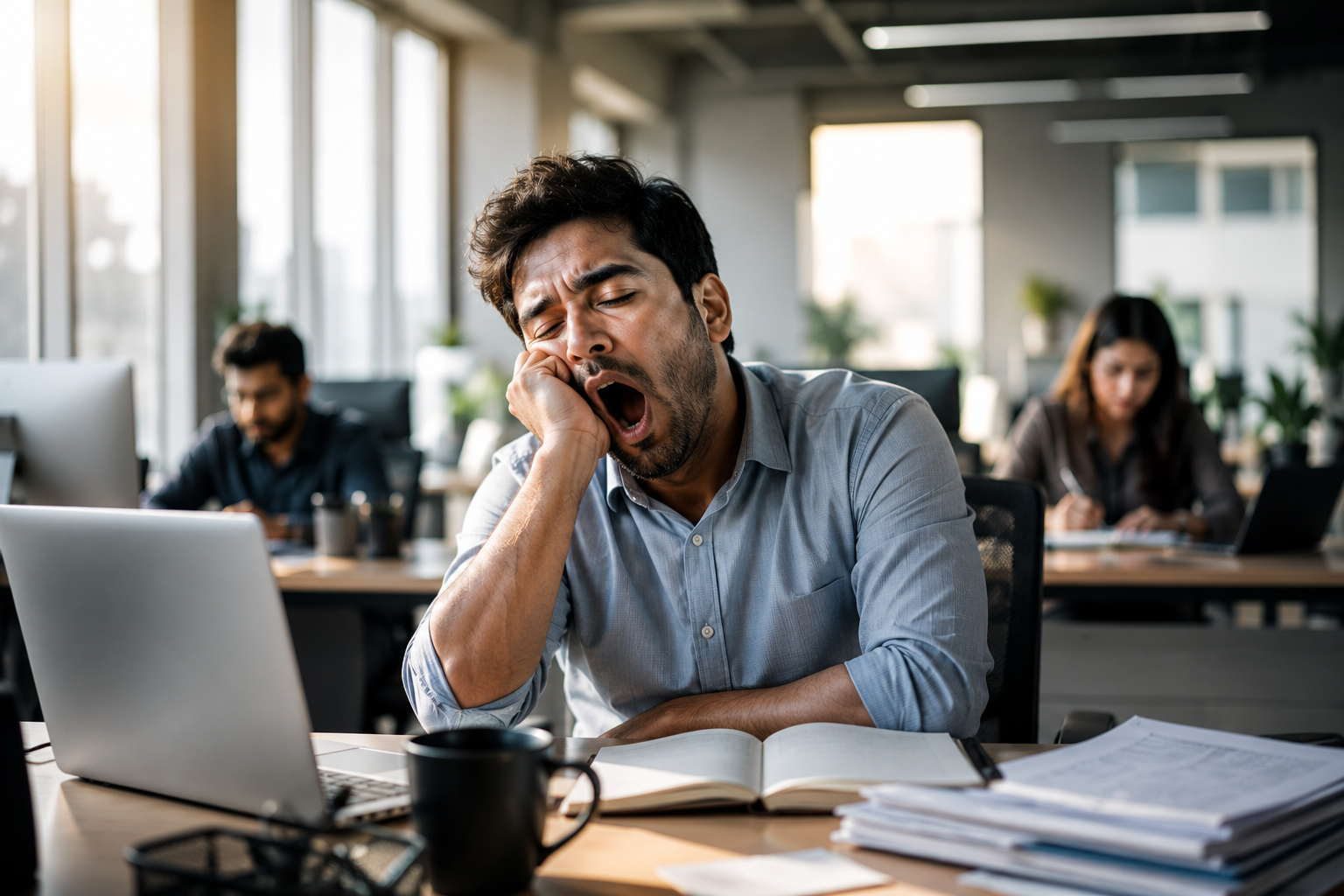
Daytime Sleepiness Is Usually the First Sign
When excessive sleepiness starts impacting your routine, evaluating a few specific details can help determine if a sleep-breathing problem is fragmenting your nights:
1. Timing & Frequency
Evaluating if it occurs occasionally under high fatigue or consistently most days of the week.
2. Airway Indicators
Checking if your sleep is paired with loud, chronic snoring or witnessed breathing pauses.
3. Waking Quality
Noticing if you wake up unrefreshed, accompanied by morning headaches or an intensely dry mouth.
4. Cognitive & Safety Toll
Assessing how severely the fatigue compromises your focus, workplace productivity, or driving safety.
Not sure what your daytime sleepiness means? Talk to Dr. Manish Aggarwal today.
Respiratory Causes of Hypersomnia
Several breathing-related sleep disorders can ruin sleep architecture at night. Because these mini-arousals don't always wake you up fully, you might remain completely unaware that your breathing is faltering—leaving you with unexplained, deep fatigue the next morning.
Repeated mechanical blocking of the upper airway during sleep. This causes brief micro-awakenings to restart breathing, heavily fragmenting sleep quality. It remains one of the primary drivers of severe daytime hypersomnia.
A pronounced narrowing of the airway that severely increases the physical effort required to breathe at night. Even without full airway closure, it causes micro-arousals that disrupt deep sleep.
A condition found in some individuals with obesity, characterized by poor, shallow breathing efficiency that drops blood oxygen levels and stresses the brain during sleep cycles.
A medical state where breathing becomes generalized as too shallow or slow during sleep, leading to insufficient carbon dioxide clearance and heavily disturbed rest.
Excess weight independently drives physical airway narrowing, chest wall restriction, and reduced lung compliance overnight, compounding and aggravating existing respiratory sleep conditions.
Common Symptoms of Hypersomnia
When daytime sleepiness stems from an underlying medical or respiratory sleep disorder, patients typically present with a cluster of night and day indicators:
- •Excessive daytime sleepiness
- •Feeling sleepy despite adequate hours
- •Loud, regular nighttime snoring
- •Witnessed breathing pauses or gasps
- •Gasping or choking sensations
- •Waking up feeling unrefreshed
- •Frequent morning headaches
- •Dry mouth upon waking up
- •Impaired daytime concentration
- •Persistent general fatigue
- •Reduced cognitive alertness
- •Poor performance while working/driving
Conditions a Pulmonologist Can Diagnose & Treat
As a specialized Pulmonologist and Sleep Medicine Consultant, Dr. Manish Aggarwal offers advanced expertise in assessing the clear overlap between lung mechanics and sleep health:
- Obstructive Sleep Apnea (OSA)
- Upper Airway Resistance Syndrome (UARS)
- Obesity Hypoventilation Syndrome (OHS)
- Sleep-related hypoventilation disorders
- Chronic respiratory conditions (COPD/Asthma overlap) affecting sleep
These respiratory sleep anomalies represent the most common treatable reasons behind unexplained, dangerous daytime drowsiness.
Understanding Narcolepsy — When It Isn't a Breathing Problem
Excessive daytime sleepiness doesn't always originate in the airway. Narcolepsy is classified as a central disorder of hypersomnolence—meaning the core physiological malfunction stems from how the brain regulates sleep-wake architecture, completely separate from mechanical breathing patterns.
Key Core Symptoms
- • Sudden, overwhelming daytime sleep urges
- • Sudden muscle weakness (cataplexy) from emotions
- • Vivid, dream-like hallucinations when waking/sleeping
- • Sleep paralysis episodes or highly disrupted night sleep
Neurological Causes
Narcolepsy is generally linked to an autoimmune or structural loss of hypocretin (orexin)—a vital neurotransmitter responsible for stabilizing wakefulness. It is non-respiratory.
Diagnosis & Testing
Requires specialized diagnostic testing beyond a normal sleep study, such as a Multiple Sleep Latency Test (MSLT) alongside meticulous neurology-coordinated assessments.
Because central hypersomnolence needs multi-disciplinary expertise, Dr. Manish Aggarwal performs the comprehensive baseline medical screening and seamlessly coordinates care pathways with neurology when central narcolepsy is suspected.
When Should You See a Pulmonologist?
Occasional tiredness after a single late night is perfectly normal. However, you should schedule a dedicated sleep-breathing evaluation if you check any of the following warning indicators:
How Hypersomnia Is Diagnosed
Isolating the accurate trigger behind hypersomnolence involves a methodical, objective clinical sequence to track oxygenation and neural mapping:
Detailed History
Comprehensive mapping of your long-term sleep schedules, snoring frequency, and daytime cognitive dips.
Epworth Scale
Standardized clinical questionnaire measuring your exact statistical likelihood of dozing off during daytime tasks.
Polysomnography
An in-depth, overnight sleep study tracking breathing cycles, oxygen trends, brainwaves, and physical effort.
Home Testing
A simplified sleep apnea monitoring system deployed comfortably at home for select, eligible clinical profiles.
Pulse Oximetry
Continuous mapping of systemic peripheral blood oxygen levels during all nighttime sleep hours.
Pulmonary Testing
Targeted lung function studies (spirometry) if underlying restrictive or chronic airway disease is suspected.
Sleep Diaries
Patient-logged trackers monitoring actual sleep boundaries and environmental disruptions over 1-2 weeks.
Physical Airway Exam
Thorough inspection of the upper oral cavity, palate, and neck circumference to catch anatomical narrowing.
Hypersomnia Treatment Approach
Once testing highlights the root breathing anomaly, medical interventions prioritize stabilizing the nighttime airway. This ensures uninterrupted oxygenation, resolving daytime sleepiness:
CPAP Therapy (Continuous Positive Airway Pressure)
The clinical gold-standard for OSA. Delivers constant, gentle air pressure via a tailored mask to keep the soft tissue of the airway from collapsing.
BiPAP Therapy (Bilevel Positive Airway Pressure)
Utilizes dual pressure settings (higher on inhalation, lower on exhalation) for complex profiles needing extra mechanical breathing assistance, like OHS.
Airway Weight Management
Supervised weight reduction strategies to substantially lower parapharyngeal fat deposits, instantly reducing airway collapsing forces.
Positional Therapy & Airway Support
Using targeted structural sleep positioners to prevent tongue fallback, coupled with aggressive treatment of any underlying lung conditions.
Regarding Hypersomnia Medications: Central wake-promoting drugs might be integrated into a comprehensive care model in specific instances. However, there is no generic solution; prescription relies entirely on the precise diagnostic profile.
Synergistic Lifestyle Adjustments
- ✓Maintain a strict, identical sleep and wake schedule daily.
- ✓Eliminate alcohol and sedatives close to bed (they relax airway muscles).
- ✓Prioritize side sleeping over back sleeping if clinically advised.
- ✓Avoid consuming heavy meals within 3 hours of your bedtime routine.
- ✓Optimize sleep hygiene by keeping bedrooms cool, pitch-dark, and quiet.
Persistent sleepiness is highly correctable once the breathing obstacle is pinpointed.
Why Choose Dr. Manish Aggarwal for Sleep Care?
Dual qualification as a Pulmonologist and Sleep Specialist with deep expertise in respiratory sleep biology.
Strictly evidence-based, data-driven approach utilizing advanced, precise diagnostic tools.
Seamless personal integration and ongoing machine titrations for CPAP/BiPAP systems.
Dedicated, compassionate long-term tracking to modify pressures and support adherence over time.
Frequently Asked Questions
Hypersomnia is excessive daytime sleepiness that occurs even after what should be enough sleep at night. It's often linked to poor sleep quality caused by an underlying condition.
Common symptoms include excessive daytime sleepiness, loud snoring, unrefreshing sleep, morning headaches, and difficulty concentrating.
Common causes include sleep-related breathing disorders such as Obstructive Sleep Apnea (OSA), Upper Airway Resistance Syndrome (UARS), and Obesity Hypoventilation Syndrome (OHS).
Yes—Obstructive Sleep Apnea is one of the most common causes of excessive daytime sleepiness, as it repeatedly disrupts and fragments sleep throughout the night.
Idiopathic hypersomnia is excessive daytime sleepiness with no identifiable underlying cause even after thorough clinical evaluation and standard sleep studies. It may require further specialised sleep testing.
It is typically diagnosed through a detailed clinical sleep history, standardized questionnaires like the Epworth Sleepiness Scale, and an overnight sleep study (polysomnography).
Treatment usually involves CPAP or BiPAP therapy, targeted weight management, positional therapy, and structured lifestyle changes based on your individual diagnostic data.
Wake-promoting medications may be considered in specific cases as part of an overall treatment strategy, but only after a complete clinical evaluation and dependent on the true underlying cause.
Narcolepsy is a central disorder of hypersomnolence originating from how the brain regulates sleep-wake boundaries, whereas hypersomnia from sleep apnea is driven by physical, repeated airway blockages and breathing disruptions during the night.
You should see a pulmonologist if your daytime sleepiness lasts for several weeks, occurs alongside loud snoring or witnessed gasping/breathing pauses, or actively compromises your safety while working or driving.
Still have questions?
We are available to answer queries, schedule urgent EBUS sessions or arrange Sleep diagnostic devices.
Don't Ignore Persistent Daytime Sleepiness
Protect your daily cognitive performance and safety. Uncover the underlying sleep-breathing block with expert clinical management in Delhi.